2025 wrapup

We had a strong finish to the year, so here is the latest from the Reichert lab as we are just about ready for the spring semester.

Student News

The big news is that Jain P.K. successfully defended his Ph.D.! Jain is the first Ph.D. student to graduate from the lab. His dissertation was titled “Temporal integration and binaural processing of acoustic information in Cope’s gray treefrogs (Hyla chrysoscelis). It has three chapters looking at different aspects of neuroethology of sound processing, and we are now working on getting all three chapters published, so stay tuned… Jain returned to India after graduating and will be missed!
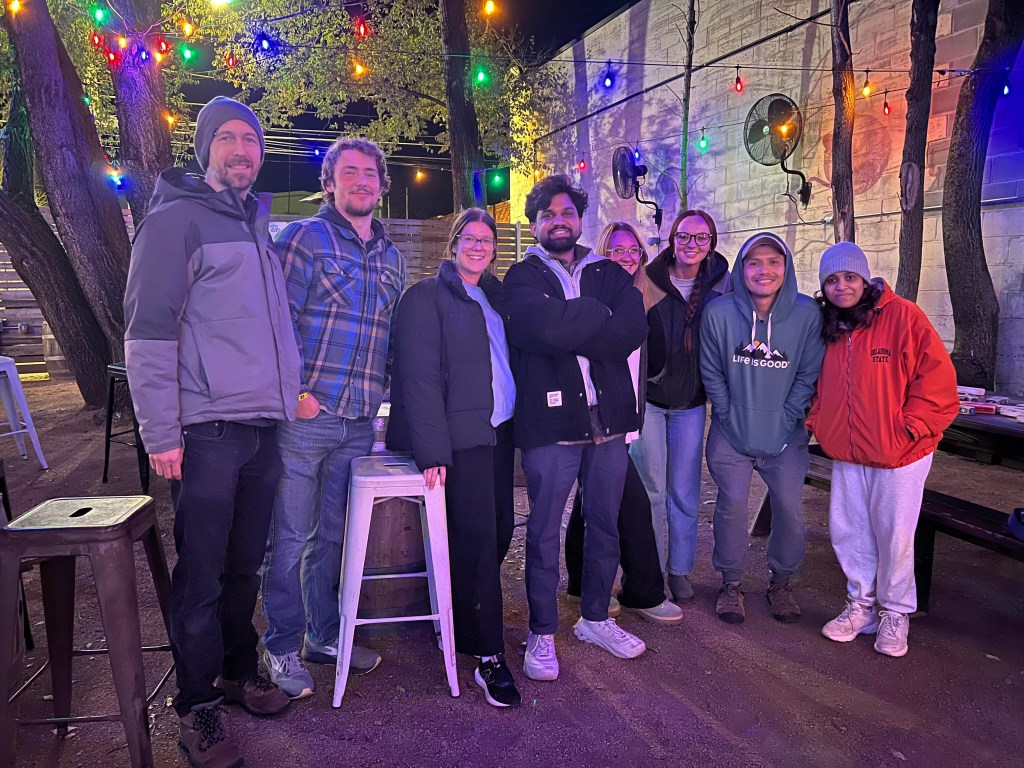
Jain’s goodbye party at Stonecloud featuring the current lab (L-R): Michael Reichert, Kaleb Banks, Natalie Mitchell, Jain P.K., Rachel Jacks, Alyssa Stockebrand, Alejandro Marcillo, Himidu Pitigala

In other good student news:

Our superstar undergrad Alyssa Stockebrand graduated with her bachelor’s degree. Alyssa will keep working with our data in the spring semester. Alyssa also won first place for best poster at the Karen Smith undergrad research symposium!

Kaleb Banks passed his comprehensive exam! Kaleb was also awarded the Distinguished Graduate Fellowship from OSU.

Natalie Mitchell began her MS degree and started working on an exciting project looking at frog ear parasites. Both she and Rachel Jacks survived their first semester as a TA.

Papers

We had two more papers published in Fall 2025, both coming out of our ODWC-funded crawfish frog project. Both were led by Owen Edwards and Kaleb Banks. The first reports our multi-year monitoring of a population of crawfish frogs in southeastern Oklahoma and includes some important demographic information as well as details on movements to and from the breeding pond. The second was based on our observation of a few unusual frogs that appeared to be hybrids between crawfish frogs and other species. After some debates about the photos of these individuals we decided to actually confirm that these were hybrids using genetic data, and found that in fact they were! This is a really surprising finding, with important implications for conservation of this threatened species. We’ve got a few more crawfish frog papers in the works so be on the lookout in 2026…

Otherwise, we’ve got lots of projects in the works as usual and a few exciting papers that are under review or in press so 2026 is looking good already. We’re also looking forward to a spring break study abroad course in Costa Rica taught by Michael along with Matías Muñoz, and frog season is just around the corner!
Fall 2025 Update

The fall semester is just about to start, so here are the latest news from the lab!

Frog season

We had unusually high amounts of rain in summer 2025, which meant that it was a good frog season. This year we focused on measuring metabolic rates of calling frogs, combined with measurements of their calling in the field, their resting metabolic rates, and a project by new Ph.D. student Rachel Jacks looking at potential personality traits and how they correlate with metabolism. Meanwhile, Kaleb Banks was busy as usual in year 3 of our crawfish frog project, among other things mapping a whole lot of crayfish burrows.

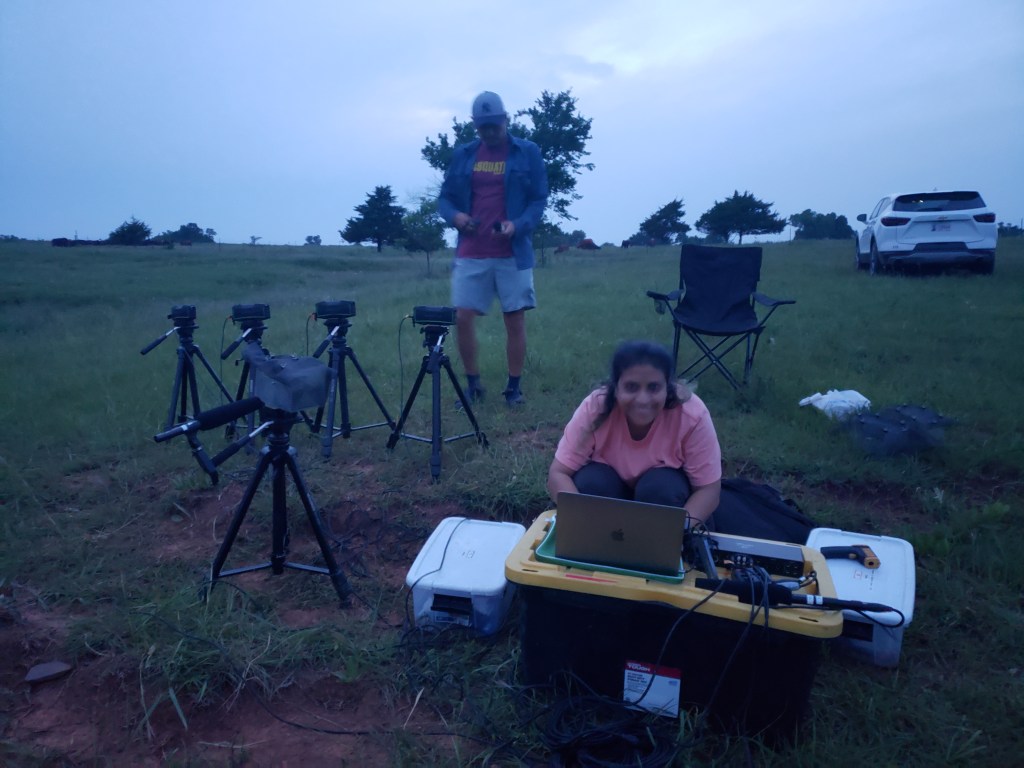
Himidu and Alejandro trying out a complicated 4-speaker playback experiment at Kennedy Pond

Papers

We had papers come out from several collaborations, new and old, including two from Michael’s previous work on great tits in Ireland, one looking at diet variation and another looking at social networks and how they vary across different spatial arrangements of resources. Michael has been working all summer on a follow-up to the social network paper, to be sent out soon. We also had a paper stemming all the way back from Michael’s time in Berlin on competitive signaling in bush-crickets. Another more recent collaboration was published in January, led by Owen Edwards and looking at factors affecting range expansion in green treefrogs. Finally, the first paper from our work on gray treefrog metabolic rates came out in Journal of Experimental Biology. Led by Phoebe Will, we show that there is no relationship between resting metabolic rate and calling.

Conferences

We were well represented at conferences this year:

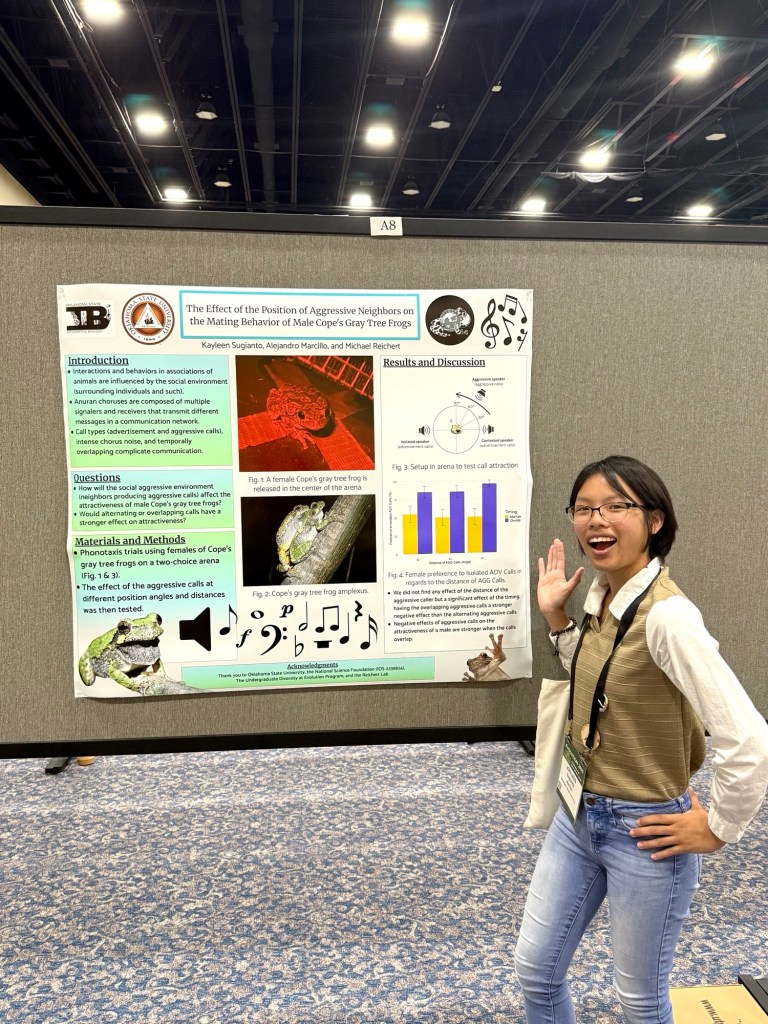
-Himidu Pitigala and Kayleen Sugianto presented at Evolution. Kayleen took part in the UDE program at the conference!

-Kaleb Banks presented at ASIH

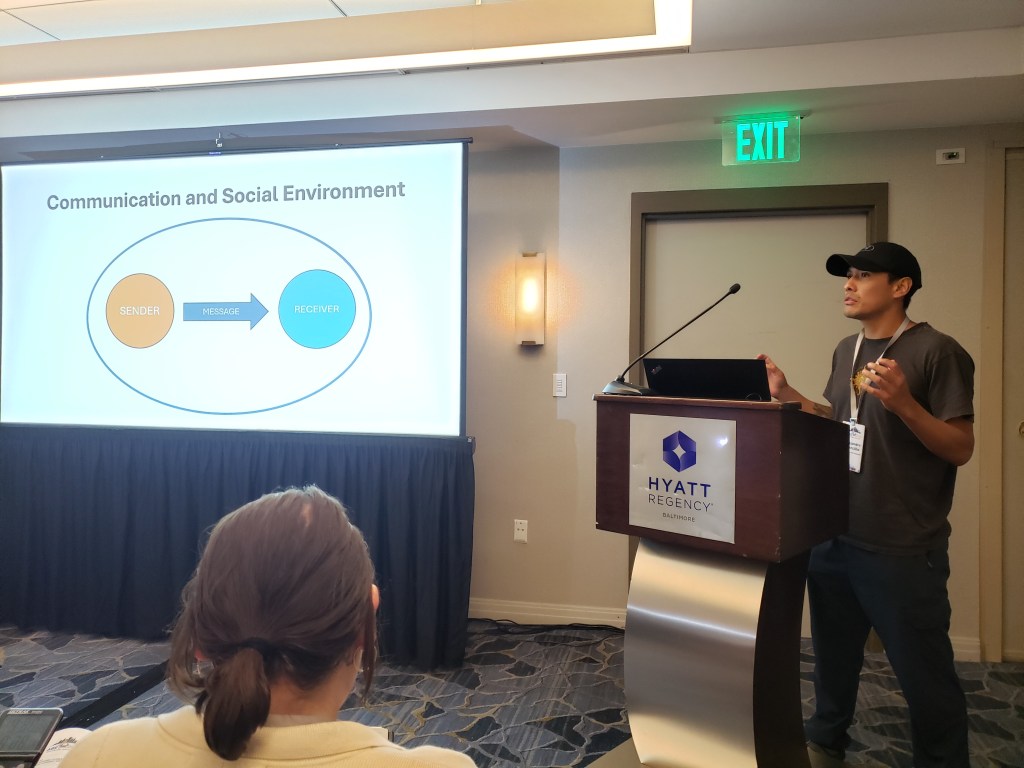
-Alejandro Marcillo, Michael Reichert and Rachel Jacks presented at the Animal Behavior Society conference

-Kennedy Funa and Kayleen Sugianto both presented at the National Conference on Undergraduate Research

-On campus, Brendan Dehner presented at the ON-RaMP symposium, Kennedy Funa presented in the Wentz Symposium, McKenna Shearer presented at the Freshman Research Scholars Symposium, and Kennedy, Sara Keyser and Raygan Kyeremateng presented at the OSU Undergraduate Research Symposium.

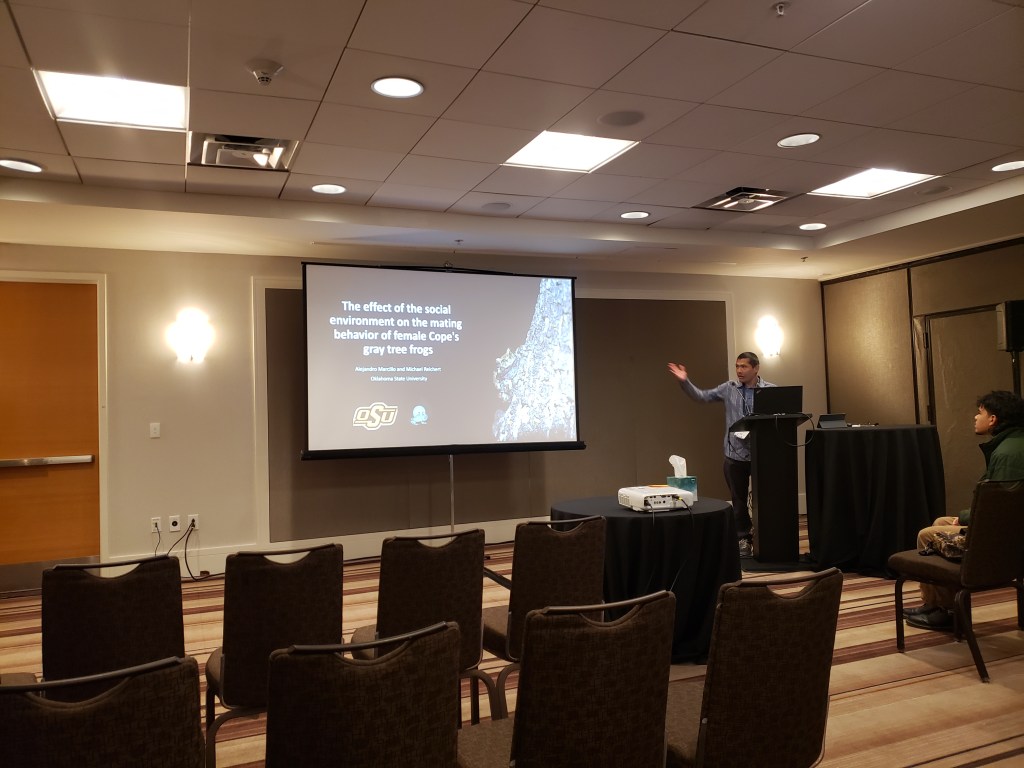
Above, Kayleen Sugianto presented at Evolution and Alejandro Marcillo’s talk from ABS

Other news, good and bad

As part of our NSF CAREER grant, and in collaboration with Galactic Polymath, we developed a set of lessons for high school science students on trade-offs in biology. The first lessons have already been used in several classrooms! These lessons include videos (featuring Michael, Phoebe and Kayleen from the lab), real data from our previous work, and fun exercises to get students working with real scientific data: https://teach.galacticpolymath.com/units/en-US/14

Another fun outcome of the Galactic Polymath collaboration was building an online sound analysis software called Soundlab. We think this will be an excellent tool for teaching and learning about the properties of sound.

Unfortunately our NSF funded ON-RaMP program was one of hundreds of NSF grants that were terminated by the government. This was a very detrimental action that caused us to have to cancel the final year of the program, resulting in us turning down 10 mentees that we had previously made offers to. In addition to a staff position that was cut, this cost 11 jobs, and included some loss of personal funds for participants who had arranged plans to come to campus, as well as waste of state taxpayer funds as the university devoted time and energy to shutting down a program unexpectedly. Most importantly, a very successful program for training students to do science, along with the actual research projects they would do, was cut short, limiting the development of the US scientific workforce. For our lab, Brendan Dehner was in the program when it was cut but thankfully had completed most of his work and was able to finish without major disruptions. However, we had made an offer to Natalie Mitchell, a promising student, which had to be rescinded. Thankfully, we were able to come up with an alternative position for Natalie, who will be joining a lab as a MS student in the fall.

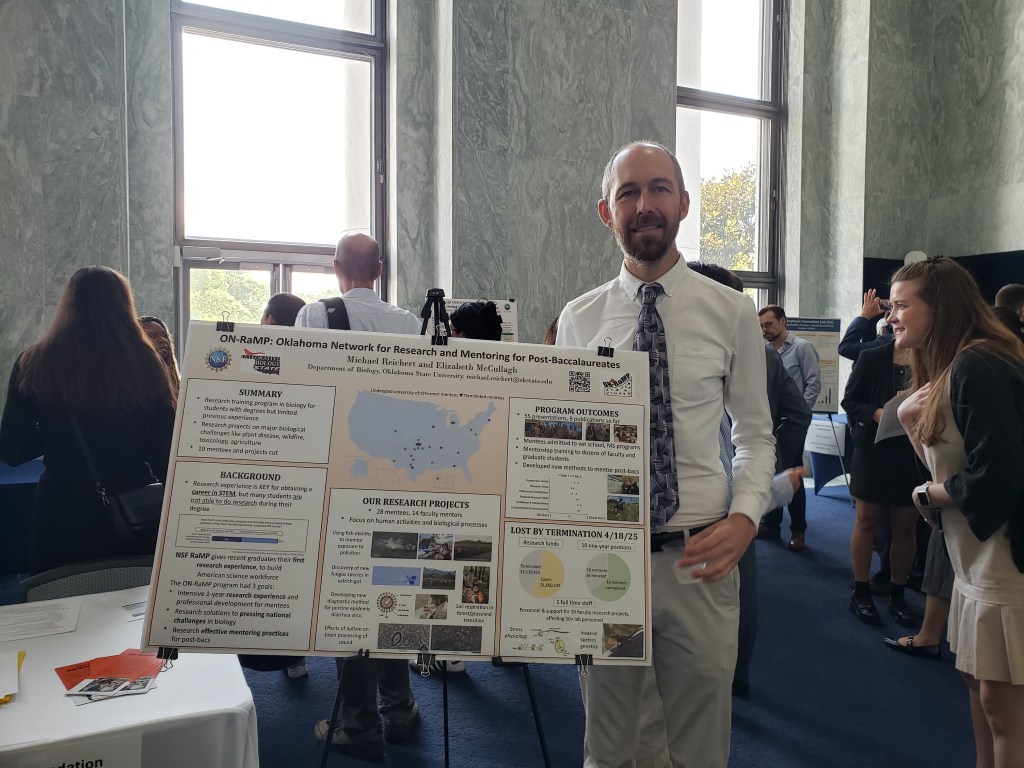
To highlight the serious damage to American science caused by these actions, Michael presented a poster about ON-RaMP in Washington D.C. and spoke with press and congressional workers about our successes and what we lost.

Michael presenting a poster about the canceled ON-RaMP program to press and political aides in Washington D.C.

January 2025 Update

There have been lots of good accomplishments and changes in the lab, so here’s a quick summary.

Graduations and new lab members

Phoebe Will successfully defended her masters thesis! This was the first work out of the lab on metabolic rate and its effects on calling, which will be a big focus in the next several years. On that note, we welcome in two new lab members for January 2025: Rachel Jacks is a new PhD student and Matías Muñoz will be the first postdoc in the lab!

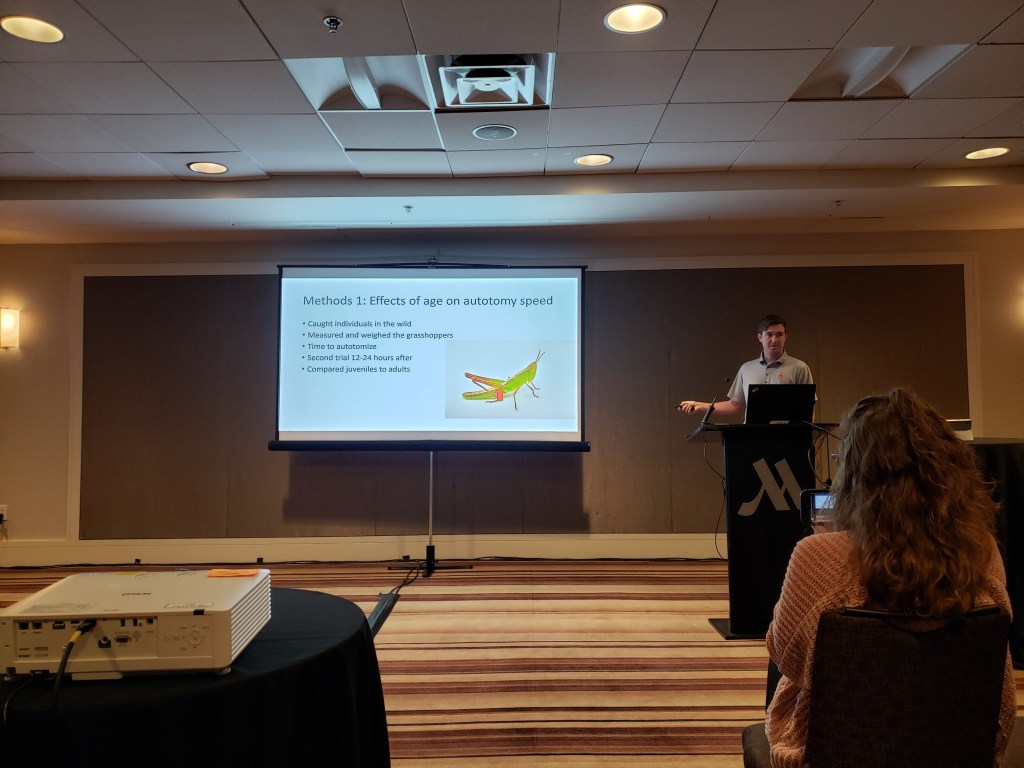
Our NSF funded RaMP post-baccalaureate mentoring program is recruiting for year 3. Meanwhile, Brenden Dehner has been doing great work as the lab’s mentee for year 2. He collected a very nice dataset on the effects of autotomy on movement in grasshoppers, and looked at some of the factors that cause variation in autotomy speed. We are working on publishing that one and meanwhile he gave a great talk at SICB in Atlanta.

Brendan presenting on grasshopper autotomy at SICB

Papers

We had a few more papers come out in the second part of 2024. First, PhD student Kaleb Banks got his first paper from his work on the crawfish frog project, looking at how habitat affects sound propagation of crawfish frog calls. It was recently published in Bioacoustics. We were also involved in a big collaborative effort to discuss the state of amphibian genomics research as part of the Amphibian Genomics Consortium, recently published in BMC Genomics. Our research is starting to head in that direction so it was a good opportunity to discuss the challenges in the field. We’ve got a few papers coming out soon in Animal Behaviour from past work on insects and birds so stay tuned!

Other good news

Undergrad Kennedy Funa has been hard at work as a Wentz Fellow, looking at effects of experience in aggressive contests on future behavior in crickets.

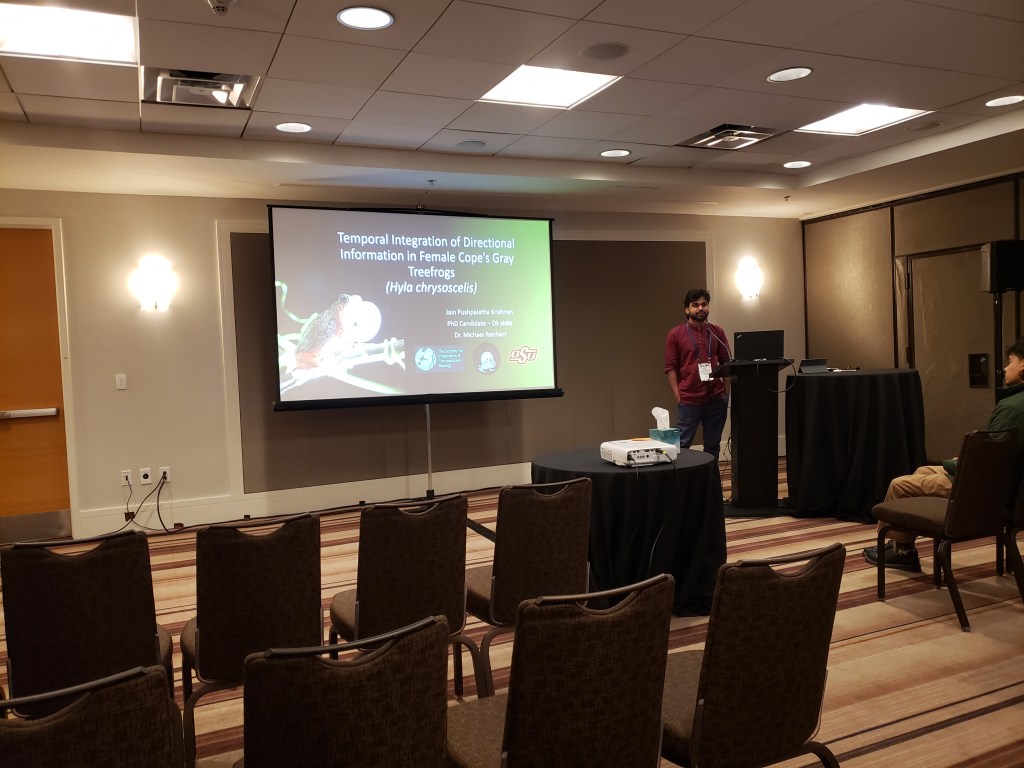
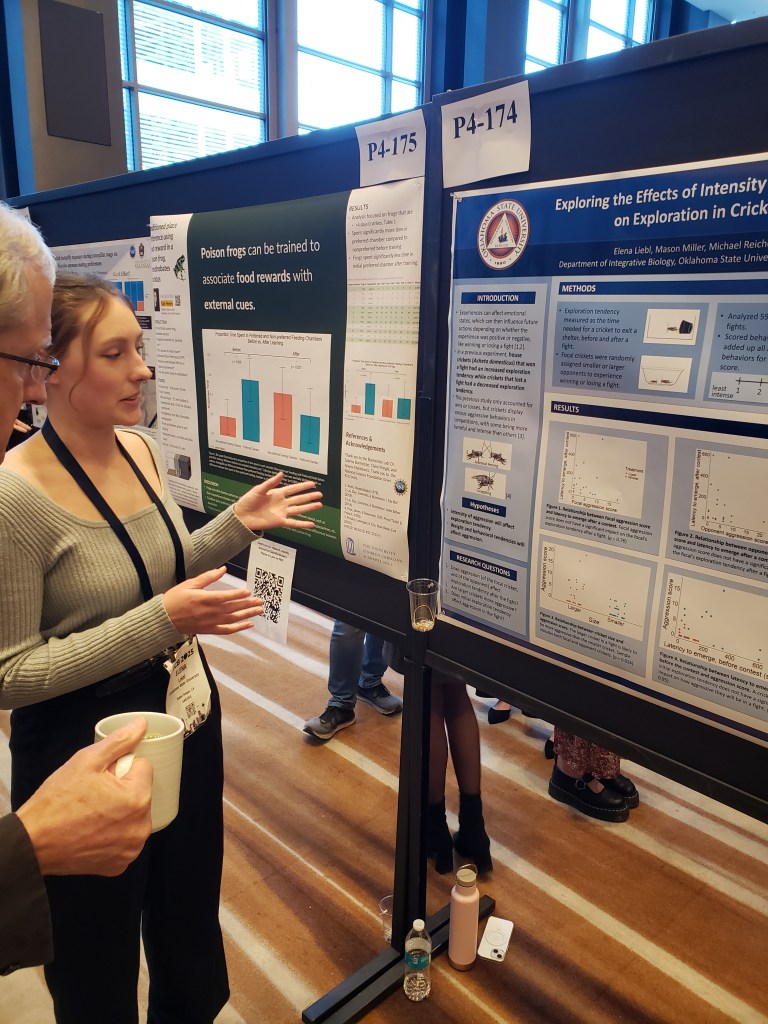
The lab was well represented at SICB. Michael presented MS student Phoebe Will’s work on resting metabolic rate and calling in gray treefrogs. Alejandro Marcillo and Jain PK both gave talks on the fist chapter of their PhD. And lab alum Elena Liebl gave a poster on some of our cricket aggression work. Michael also attended the Animal Behavior Society Conference in Ontario in the summer and presented on our communication network simulation work.

Our crawfish frog project received a 2-year funding extension from the Oklahoma Department of Wildlife Conservation, which will fund Kaleb Banks for a few more years to continue our exciting work on that species in Oklahoma. We have several papers on crawfish frogs in the works.

Michael won the 2024 Distinguished Early Career Faculty Award from Oklahoma State University.

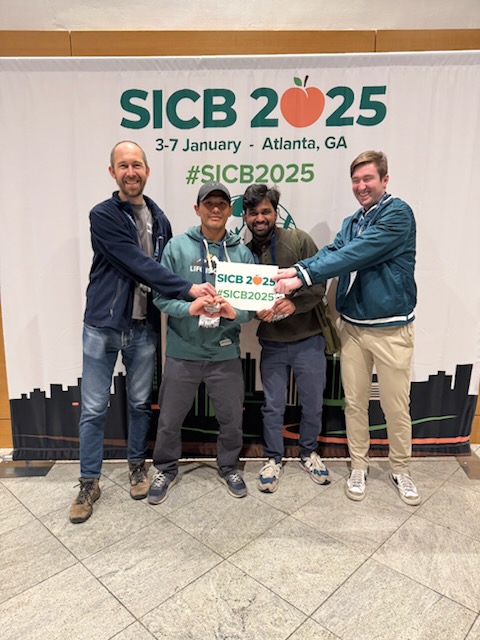
Above, Alejandro, Jain, Elena, and the current Reichert lab in action at SICB 2025 in Atlanta.

2024 Update

Clearly I don’t update very often, but here is a roundup of our latest lab news:

Grants

We recently received funding from the NSF CAREER program to look at the energetic basis of individual variation in calling behavior in gray treefrogs. This is a very exciting opportunity and will really expand our work on metabolic rate measurement, and will bring in new personnel including students and a postdoc. This grant began April 1, 2024, so stay tuned for updates.

Our NSF funded RaMP post-baccalaureate mentoring program is nearing the end of its first year. We brought in a great cohort of 8 mentees, who worked in different labs on independent projects related to anthropogenic effects on biological processes. The Reichert lab hosted Matthew Thompson, who worked on color polymorphism in grasshoppers and cognition in crickets. We’ll have a new mentee soon, and the program is expanding to 10 total mentees in June.

Our Oklahoma Department of Wildlife Conservation funded project on crawfish frog ecology finished its second year. Grad students Kaleb Banks and Owen Edwards did a huge amount of work to identify new populations, intensively monitor an existing population, and trial new methods to monitor populations with bioacoustics. The students are working hard on publications and we should have some out soon.

Papers

We’ve had several exciting papers in the last few years. I was especially excited by the two in 2024. The first is published in Evolution and represents the first two years of fieldwork at Oklahoma State, and is a project I’ve had in mind for quite some time. It shows repeatability and covariance in call traits in gray treefrogs, and is the basis for our upcoming work on behavioral energetics. The second will be published next week in Philosophical Transactions of the Royal Society B. It is a simulation model of a communication network, and is the first simulation I ever attempted so I’m very excited to have it out there. We got some really cool results, including finding that variation in receiver characteristics can drive communication network structure, something I’m looking forward to following up on in the coming years.

Another pretty exciting paper was published last year in collaboration with colleagues Matt Bolek and Liz McCullagh. This was an article in PNAS on parasite effects of receivers of animal communication signals. We really brought together some diverse perspectives on this one and I hope it serves as inspiration for many future studies.

Awards

Kaleb Banks received honorable mention for the NSF GRFP!

Alejandro Marcillo received the Wilhm Outstanding TA award in the Integrative Biology Department

Himidu Pitigala received the Waters Award for research in Aquatic Ecology

Mason Miller successfully defended an honors thesis

Kennedy Funa received the Wentz Fellowship

Kayleen Sugianto received the Niblack Scholarship

Michael Reichert received the Early Career Faculty Award for Scholarly Excellence from the OSU College of Arts & Sciences, and the OSU Excellence in Research Mentoring Award

Other News

Phoebe Will designed an amazing lab logo for us!

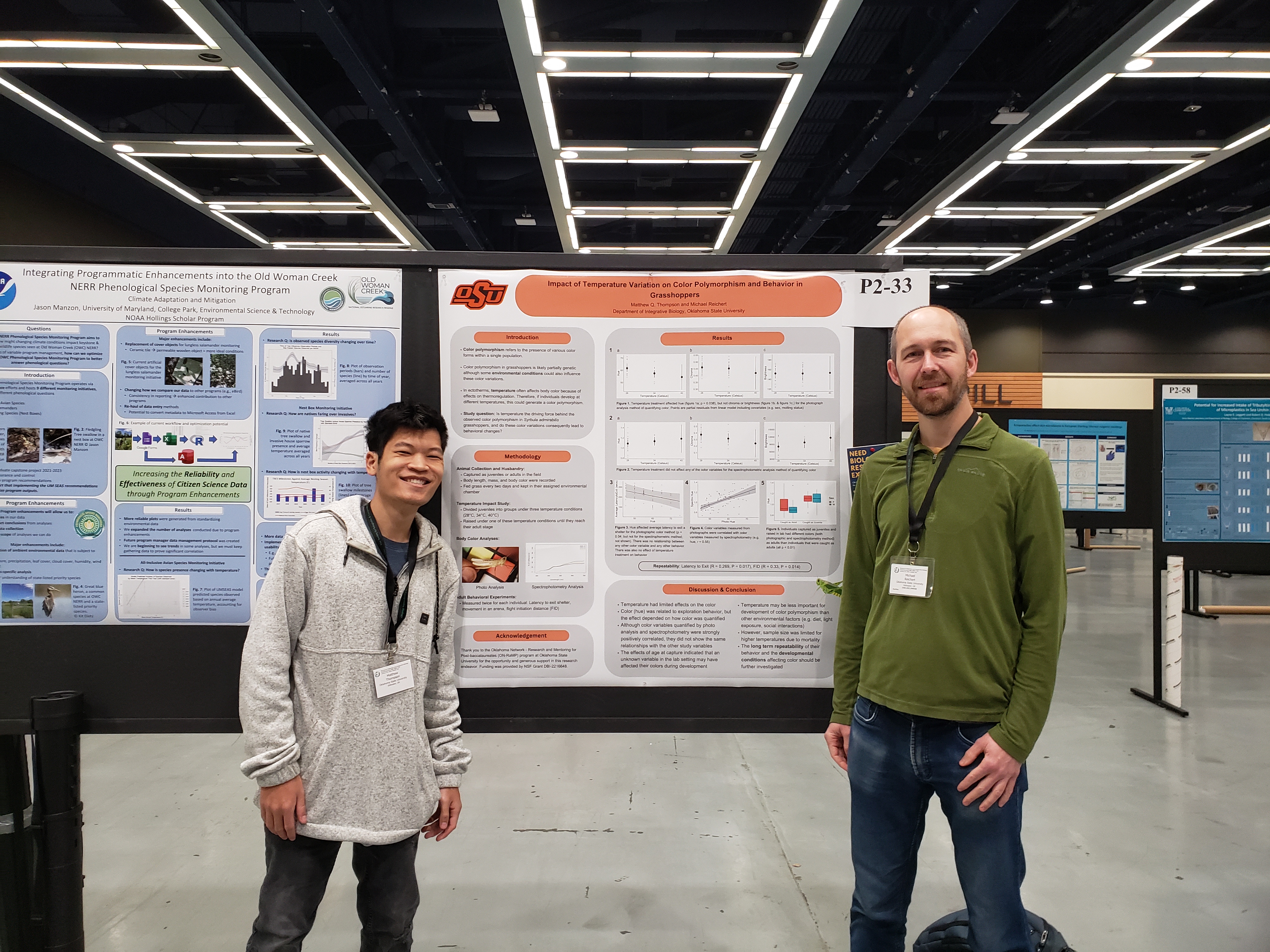
Matthew Thompson and Michael Reichert traveled to Seattle for SICB 2024. Here we are in front of Matthew’s poster:

The lab was also well-represented at the 50th annual Kansas Herpetological Society Conference:

l

Recruiting MS student for Fall 2022

***UPDATE: This position is filled***

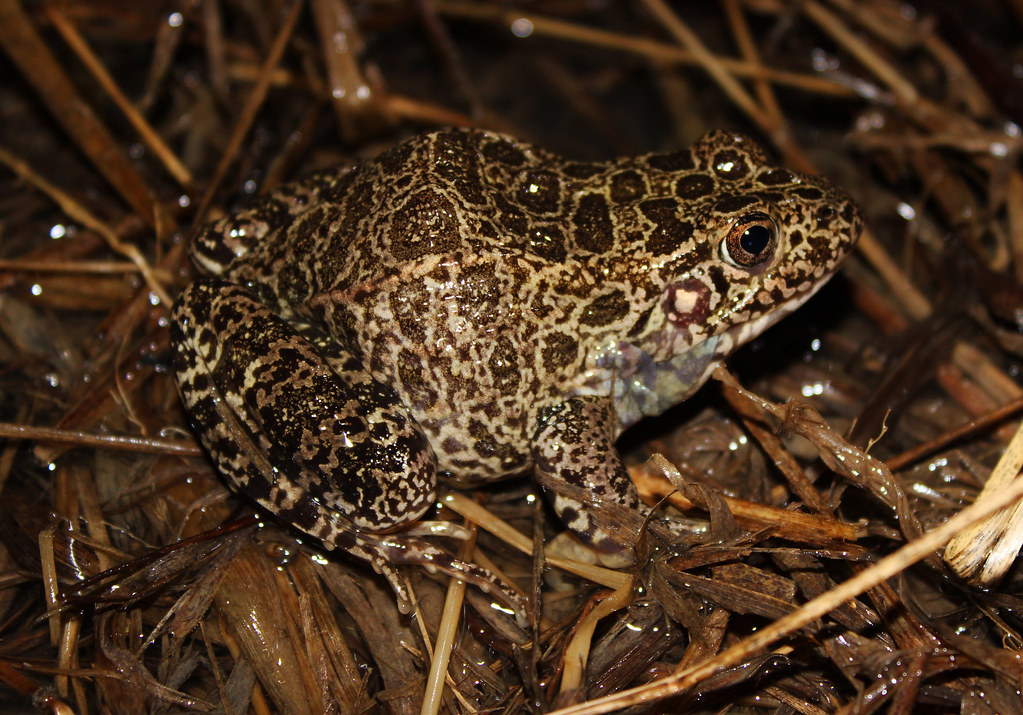
I am recruiting a master’s student to work on a project funded by the Oklahoma Department of Wildlife Conservation to study the distribution of crawfish frogs in Oklahoma using acoustic survey techniques.

The student would be funded by RA support in spring semesters of 2023 and 2024, and TA support in fall semesters. The project involves roadside auditory surveys, deployment of passive acoustic recorders to detect crawfish frog calling activity and locate new populations, testing techniques for population estimation using passive acoustic recording, and mark-recapture studies to estimate demographics in specific populations.

Useful, but not required, skills and experience for this position are: field herpetology research, road surveys, mark-recapture methods. Students with experience in acoustic population size estimation techniques are especially encouraged to apply. Candidates must be comfortable driving and working outdoors for long periods of time in challenging field conditions.

I am looking to fill this position as soon as possible. There are two steps to applying. First, by May 15 please Email me a copy of your CV and a brief statement of your experience and motivation for applying. I will choose the top candidate and then that student must formally apply as soon as possible to the master’s program in the Department of Integrative Biology at Oklahoma State University (Click here for details). Preferable start date is Fall 2022 semester, but students interested in starting in Spring 2023 will be considered.

I am very interested in a diverse and supportive lab environment and strongly encourage applications from members of underrepresented groups.

*Photo credit: https://www.flickr.com/photos/2ndpeter/13613496425

Diversity, Equity, Justice and Inclusion Statements

In our joint lab meeting, the members of the Reichert lab and the McCullagh lab discussed how to make our lab groups more supportive places and make ourselves more aware of DEJI issues (not the most important thing I learned, but I did discover that DEJI is an acronym). With a shoutout to Dr. McCullagh for the original compilation, here are the statements that different lab members contributed to summarize our labs’ philosophy. It seems in the spirit of DEJI to have many statements, where all contributed, so rather than pick one I’ll share them all!

Our mission is to learn more about the natural world and help others to do the same, by being supportive of each other, active in our community, and always working to make a more inclusive science for everyone.

Our mission is to make science approachable to anyone who is interested by being open and understanding of the diversity of people (in thought, interests, background, etc.)

Our mission is to include all members regardless of background and commit to working in a diverse setting. All groups should have an equal opportunity to learn and bring forward meaningful science. 

Our mission is to foster scientific opportunity within and outside academia through inclusion, equal representation, and accessibility. 

Our mission is to create an accessible and inclusive lab environment by valuing members’ varying backgrounds, experiences, and opinions.

Our mission is to cultivate scientific thinking and research for a better good beyond and to inculcate these ideas beyond cultural and linguistic boundaries 

Our mission is to perform robust scientific research by encouraging people of diverse opinions, perspectives, and cultural backgrounds to bring their whole identities to the lab.

Long-awaited 2020 update

Well, it looks like the good intentions to keep the site updated with news have gone the way those usually go. Let’s get caught up on everything that’s happened in the year+ since the last post!

The lab had its first graduates: undergraduates Nicole Clapp and Cheyenne Smith both graduated in the OSU class of 2020 and have moved on to medical and graduate school, respectively.

Nicole Clapp successfully defended an honor’s thesis. Stay tuned for a publication coming out of this work, which we just submitted for review last week.

A.J. Hager, another undergraduate in the lab, was awarded the Wentz Fellowship and did an excellent research this project on dear enemy recognition in Anolis.

James Erdmann & Jonathan Albers had a successful first year in grad school and are gearing up their projects in year 2.

Courtney Byrd joined the lab in Fall 2020 as a new Master’s student.

We’ve teamed up with Dr. Liz McCullagh for joint lab meetings and have some exciting collaborative projects in the works: https://elizabethmccullagh.wordpress.com/

Iván de la Hera, an old colleague from the Ireland days, joined as research assistant and has been hard at work analyzing frog calls, helping in the field, and trying to get the local grasshoppers to do something interesting.

Michael, James, Nicole and Cheyenne all contributed talks or posters to the 2020 SICB conference in Austin, in what turned out to be our last in-person conference for a while. Michael and Jonathan participated in the virtual Animal Behavior Society meeting in July.

Michael began teaching Animal Communication, the first time this has been offered at OSU. He decided to make the most of the online format by posting all the lectures online for the world to see: https://twitter.com/FrogListener/status/1295374628601376768

Frog season 2020 was scaled way down, but Michael and Iván put in some serious effort to run playback tests at the height of the lockdown. Highlights include finding a timber rattlesnake up in the trees, lots of great-horned owl sightings, and having the car towed on the very night that a thunderstorm flushed us from the pond early.

Publishing was a bit slow, but Michael got his first paper on experiments done in Ireland, as well as a nice review on bioacoustics and cognition. Many are in review right now though, so more exciting news coming soon! This includes everything from the first experimental work we’ve done at Oklahoma State, to possibly some forgotten data from 15 years ago.

We’ve managed to keep research more or less going, with virtual meetings and careful coordination. So far everyone has been safe and productive, and we hope to keep it that way. We’re looking forward to in-person lab meetings again!

Frog Season 2019 in review

Gray Treefrog

Our first frog season is in the books! Since getting started in January, we’ve been working hard to get equipment in place and some experiments planned so that the lab is off to a good start at Oklahoma State University.

The first big challenge was to find a good pond to work in. This is more difficult than it sounds. Our study species are gray treefrogs, and they can be heard almost everywhere in the area. Which sounds great, but in most cases there’s only a few of them calling in any one place. In order to do experiments on their behavior, we need very large numbers. So the key is to find a pond that has a large population that calls consistently night after night. We had several possibilities in mind based on asking around and looking at maps online. But the first few didn’t pan out. Thankfully, we came across a nice looking pond at the McPherson preserve, which happens to be OSU land. After scouting it a few days and nights we settled on working there and that turned out to be a great move. There is a very large population there! We marked 236 unique individuals and made nearly 400 separate recordings. The pond is large, surrounded by trees and fishless, so it is perfect for frogs. And several species are very abundant.

Weather played an interesting role in our field season. Mid-May was full of storms, flooding and tornado warnings in this part of the country, and it became a little frustrating to have to cancel so many nights because of the storms. However, this worked out in our favor in the end because all that rain kept the pond good and full, and the frogs came out in very large numbers most nights we were out there.

There will be some new pictures put up soon on the photos page, and check the twitter account for lots more. We saw quite a lot out there in addition to gray treefrogs.

What made it such a fun and productive summer was the great team, couldn’t have asked for a better one to get started at OSU. The frog team was:

  • Nicole Clapp – Undergraduate researcher and recipient of a Wentz scholarship to perform her independent project.
  • James Erdmann –Technician and soon to be Ph.D. student.
  • A.J. Hager – Undergraduate assistant. Quickly developing into one of the best frog finders out there.
  • Cheyenne Smith – Undergraduate researcher funded by the Oklahoma Louis Stokes Alliance for Minority Participation program to perform an independent project.

Stay tuned for updates on everyone’s project. We’ll relax a little now that the frog season is over, but we’ve got lots of data to go through as well!


Technician Position

THIS POSITION HAS BEEN FILLED. THANK YOU FOR YOUR INTEREST.


The Reichert lab in the Department of Integrative Biology at Oklahoma State University is searching for a temporary (5 month) full-time research technician to assist with our studies of frog bioacoustics. The position will run from March 15 (or as soon as possible thereafter) until August 15, 2019.

The primary duties will be field work involving audio recordings and behavioral tests in local populations of gray treefrogs. The technician will be involved in field collection efforts, behavioral monitoring, data collection and management and construction and maintenance of experimental equipment. Being comfortable with and able for work in the field at night is essential.

Preferred qualifications include:

A bachelor’s degree in biology or related area of study.

Experience working with some or all of the following: animal behavior, amphibian monitoring and marking, bioacoustics techniques & software, data management, field research

Reliability, flexibility and motivation to work both alone and as a team under sometimes difficult field conditions.


The position will be based at Oklahoma State University in Stillwater, OK. Salary is paid hourly at $12.50/hr.


To apply, please send the following to Dr. Michael Reichert at michael.reichert@okstate.edu:

CV listing relevant experience, a brief statement of interests and qualifications, unofficial copies of academic transcripts and names and contact information for two references.


For more information about the research group, see https://reichertlab.com/